
Protein before or after workout: how much timing really matters
Protein before or after workout is close to a coin flip. Muscle stays sensitive to protein for many hours after training, so clock time matters far less than your daily total. Land a dose within a couple of hours on either side and you've captured nearly all of it.
The anabolic window is measured in hours, not minutes
The 30-minute rule came out of early work showing that muscle protein synthesis spikes hard right after resistance training, and that amino acids delivered into that spike get used efficiently. Both halves are true. The mistake was reading a synthesis spike as a deadline.
Resistance training elevates muscle protein synthesis for roughly 24 to 48 hours, and it raises the muscle's sensitivity to protein over a similar stretch — a dose eaten hours after a session still produces a larger synthetic response than the same dose on a rest day. Sensitivity is highest in the first few hours and tapers from there. That's a window with soft edges, not a door that slams.
When trials equalize total daily protein and vary only when it's eaten, the timing effect mostly disappears. The apparent wins for "immediately post-workout" groups in older studies usually came with more protein overall, not better placement of it.
Protein before or after workout: what the evidence supports
Pre-workout protein doesn't vanish when you rack the last set. Around 25 to 30 g of whey keeps blood amino acids elevated for a few hours; a mixed meal with fat and fiber stretches that out further. Train an hour after eating and you're already dosed during and after the session.
So the practical rule is about the gap, not the side:
- Ate protein within about two hours before training? You're covered. Take your next normal meal whenever it lands.
- Trained on an empty stomach? Get 25 to 40 g in within an hour or two afterward — not for panic reasons, but because you've gone a long stretch without protein.
- Anything in between? It doesn't matter.
Daily total beats timing, and it isn't close
For people lifting to build or hold muscle, the common recommendation sits around 1.6 g of protein per kg of body weight per day, with a useful range of roughly 1.4 to 2.0 g/kg (about 0.6 to 0.9 g per pound). An 80 kg lifter is looking at 112 to 160 g a day. Moving from 90 g to 140 g will do more than every timing tweak in this article combined.
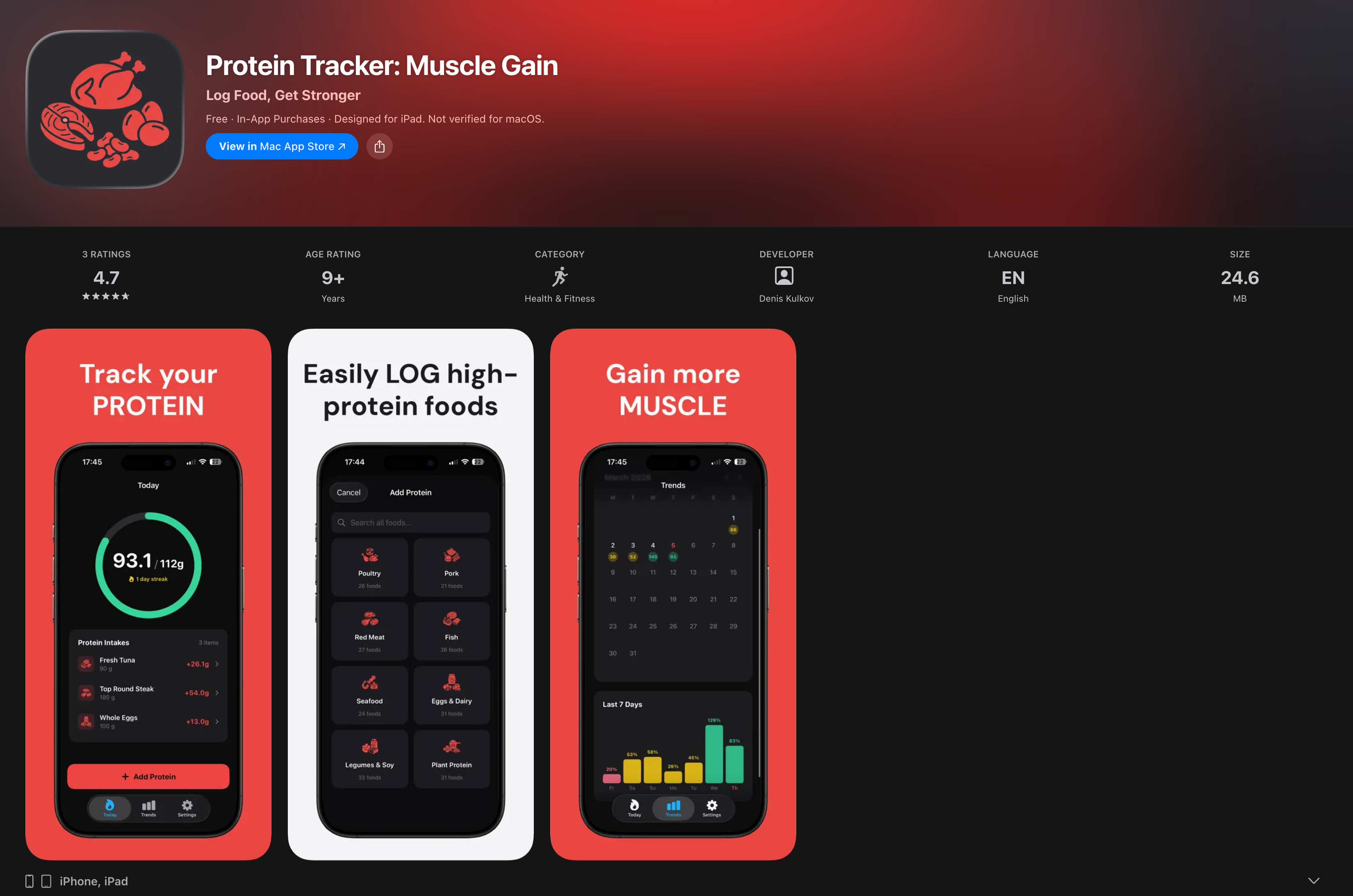
Which makes the honest version of this advice boring: count the day, not the clock. If you've never actually measured a full day's intake, the real number tends to come in under the estimate — Protein Tracker, a protein tracking app for iPhone, is one way to see where your daily total sits before you spend attention on shaving minutes off a post-workout shake.
Once that number is where it should be, how much protein to build muscle stops being the bottleneck and distribution becomes the next lever worth pulling.
How much protein after workout, and per meal
About 0.4 g/kg per meal is the working target — 30 to 40 g for most adults — and it's the same target whether or not you just trained. That amount clears the leucine threshold, roughly 2 to 3 g of leucine, that flips the synthesis switch. Some 25 g of whey gets you there. Plant blends usually need to be larger, since leucine density per gram of protein is lower.
The old "your body can only use 30 g at a time" line overstates the case. A larger dose is digested more slowly and the amino acids still get used — the response runs longer rather than hitting a cap. A 50 g sitting isn't wasted, it's just less efficient per gram than spreading it out. More on how much protein the body can absorb at once.
Four feedings at 0.4 g/kg is a clean default. Three works fine. Two 80 g sittings and nothing else is where distribution starts costing you.
Protein before bed: the one timing move worth making
Sleep is the longest fast in your day. A 30 to 40 g dose of slow-digesting protein about half an hour before bed raises overnight muscle protein synthesis compared with going to bed on nothing.
Casein before bed is the standard pick because it clots in the stomach and releases amino acids over something like six to seven hours; whey clears much faster. Cottage cheese, Greek yogurt, milk, and casein powder all do the job. Two honest caveats: the effect is clearest when the pre-sleep dose is additional protein rather than protein shifted from earlier in the day, and long-run differences in muscle gain shrink once total daily protein is matched. It's a sensible place to park protein you were going to eat anyway.
Timing decisions ranked by how much they matter
| Decision | Impact | What to do |
|---|---|---|
| Hitting your daily total | Large | 1.4–2.0 g/kg/day |
| Spreading it across meals | Moderate | 3–5 feedings at ~0.4 g/kg |
| A pre-sleep dose | Small to moderate | 30–40 g casein, cottage cheese, or Greek yogurt |
| Protein within ~2 hours of training when fasted | Small | 25–40 g |
| 30 minutes vs 2 hours post-workout | Negligible | Ignore it |
| Before vs after the session | Negligible | Whichever you'll actually do |
Settle how much protein per day you need and how to split it and you've handled the two rows that carry the weight. The rest is trimming.
FAQ
Does protein timing matter?
Far less than total intake. Once you're eating enough and spreading it over three to five feedings, further timing adjustments return very little. The pre-sleep dose is the one adjustment worth deliberately making.
Is it better to eat protein before or after a workout?
Neither is clearly better. Protein eaten in the two hours before training is still circulating during and after the session, so a pre-workout meal already covers the post-workout period. Pick the side that fits your schedule and your stomach.
How long do I have to eat after training?
Hours, not minutes. Muscle stays primed to use protein well past the old 30-minute anabolic window. If you trained fasted, aim for a meal within an hour or two; otherwise your next normal meal is fine.
What's the best time to eat protein if I only have one shake a day?
Whichever gap it fills. That's usually first thing after an overnight fast or right before bed. A shake doesn't have to be attached to a workout — put it where your day would otherwise run long without protein.
Free Protein tools
- Chicken Breast Calorie CalculatorEnter chicken breast weight, whether you weighed it raw or cooked, skin and cooking method to see calories, protein, fat, carbs and the matching raw-to-cooked weight.
- Creatine Dosage CalculatorEstimate grams per day, loading-phase split doses, time to saturation, and tub supply for the question: how much creatine should I take?
- Daily Protein Requirement CalculatorEstimate how much protein a day you should consume using your body weight, age, activity level and goal. See the g/kg basis and a practical per-meal split.
- Egg Protein CalculatorChoose an egg size, quantity, part and cooking method to see protein, calories, full macros and the share of your daily protein target.
- High Protein Meal PlannerPlan a high protein meal planner split from your daily target. Choose 2 to 6 meals and a dietary preference to see grams per meal and example foods.
- Macros CalculatorUse this macros calculator to estimate daily calories and grams of protein, carbohydrates and fat for your chosen goal and macro split.
- Protein CalculatorUse this protein calculator to estimate a daily protein range from your body weight, activity level and goal, with simple per-meal splits.
- Protein Foods ChartFilter a protein foods chart by category, serving basis and minimum protein per serving, then sort the foods to find practical options to log.
- Protein in Chicken CalculatorEstimate the protein in a chicken portion using its cut, serving weight and raw or cooked basis.
- Protein in Fish CalculatorEnter a fish type and serving weight to convert protein in fish per 100g into tracker-ready grams for your portion.
- Protein in Lentils CalculatorEstimate the protein grams in a lentil serving by cooked weight. The result uses the listed boiled-lentil value and identifies when a dry value is unavailable.
- Protein in Meat ChartChoose a meat, enter its weight and select a raw or cooked basis to compare the protein grams in common meats.
- Protein in Nuts ChartChoose a nut type, serving size and minimum protein filter to compare protein grams across nuts and seeds.
- Protein Intake CounterTrack your daily protein target with quick-add portions or a custom amount. See your running total, grams remaining and entries in one place.