
Daily Protein Requirement Calculator
Estimate how much protein a day you should consume using your body weight, age, activity level and goal. See the g/kg basis and a practical per-meal split.
Daily target
—
Daily target
— g protein/day
- g/kg basis
- —
- Per meal, across 4 meals
- —
- Body weight used
- —
Kidney disease requires a protein target set by your clinician. Very high intakes are not shown to benefit healthy kidneys, so this range is not a free-for-all.
· Free
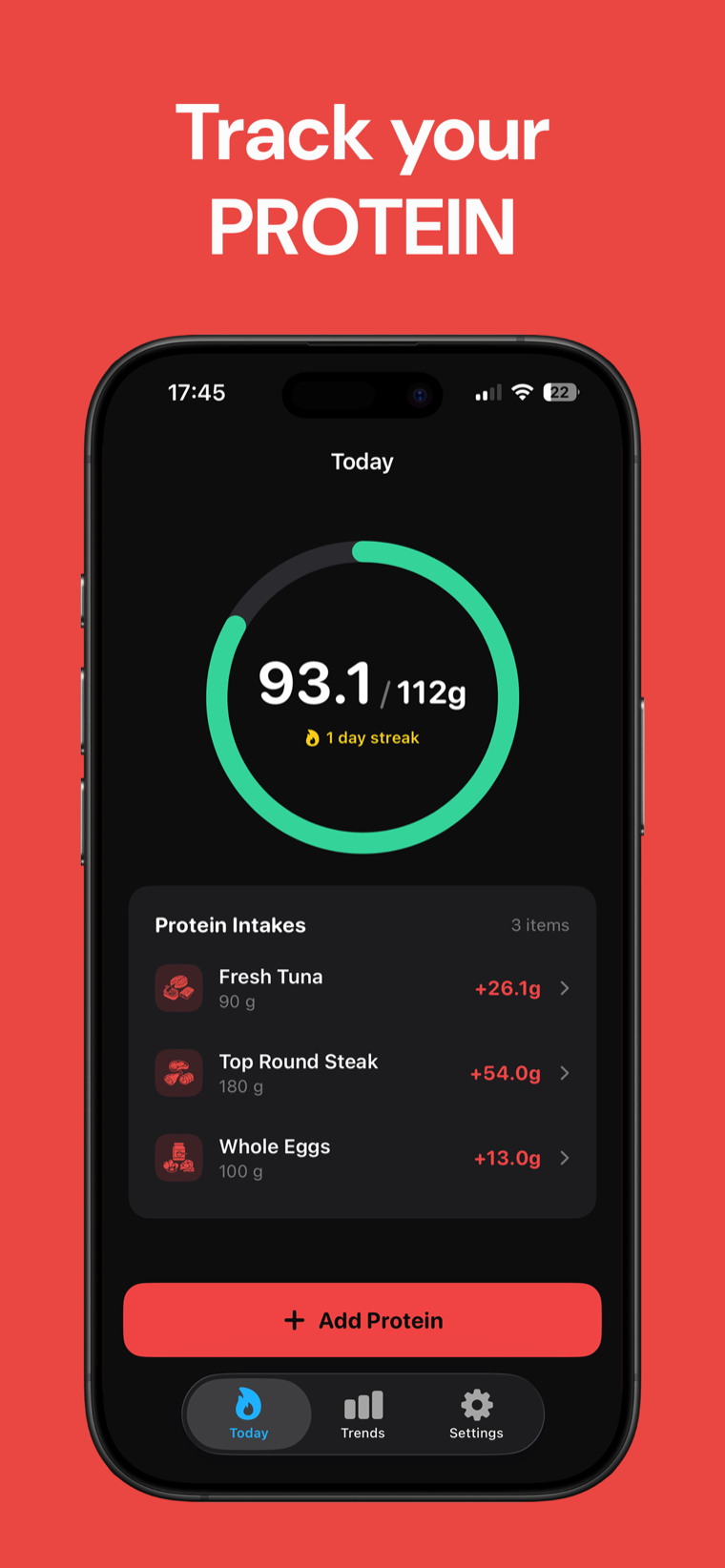
Track it in Protein Tracker.
Track nutrition habits, goals and daily routines privately on your device.

How much protein a day should I consume?
How much protein a day should I consume? The answer depends on body weight, age, activity and your goal. The RDA of 0.8 g/kg prevents deficiency in most sedentary adults, but it is a floor, not a target; active people generally need more.
This calculator converts pounds to kilograms, selects the supplied g/kg range, and multiplies it by body weight. It shows a range rather than false precision. For people with obesity, total body weight can overestimate need; lean body mass or an adjusted weight is a better basis.
Protein synthesis responds to roughly 0.4 g/kg per meal, commonly 20–40 g. Spreading the daily total across 3–4 meals is better supported than concentrating it in one, so the result uses four meals for its split.
Daily protein (g) = body weight (kg) × protein target (g/kg) Adults over 65 commonly need at least 1.0–1.2 g/kg. Pregnancy and lactation are about 1.1 g/kg and should be set with a clinician, not a calculator. People with kidney disease need an individualized target from their clinician. No supplement is required by this tool. See the sibling protein calculator at /tools/protein-calculator for a simpler estimate.
Daily protein requirement FAQ
Is 0.8 g/kg enough protein?
The RDA of 0.8 g/kg is the amount that prevents deficiency in most sedentary adults. It is a floor, not necessarily a target for active people.
How should I split protein across meals?
This tool divides the daily range across four meals. Roughly 0.4 g/kg per meal, commonly 20–40 g, is a practical reference, and spreading intake is better supported than one large serving.
What if I have obesity?
Using total body weight can overestimate protein needs. Lean body mass or an adjusted weight is a better basis, so discuss the appropriate weight basis with a qualified clinician or dietitian.
Does age change protein needs?
Adults over 65 commonly need at least 1.0–1.2 g/kg because the muscle protein synthesis response blunts with age. The calculator applies that floor to its estimate.
Is this calculator appropriate for kidney disease, pregnancy or lactation?
No calculator should set those targets. Kidney disease requires a clinician-set protein target, and pregnancy or lactation should be set with a clinician as well.