High protein breakfast: 12 ways to hit 30 grams
A high protein breakfast means about 30 grams of protein in the first meal, roughly three times what cereal and milk gives you. The quickest routes are eggs with a dairy or meat side, Greek yogurt or cottage cheese with something stirred in, or a shake built on milk.
Why 30 grams is the breakfast target
Two arguments support it, and one is stronger than the other.
The reliable one is appetite. Protein is the most filling macronutrient per calorie, and the link between protein and satiety is what people notice within a few days of switching — the 10:30 trip to the vending machine stops being automatic.
The second is distribution. If you need 130 g a day and breakfast hands you 10, lunch and dinner have to carry 120 g between them, which almost never happens. Spreading intake evenly across meals looks better for muscle protein synthesis than back-loading it, though that edge is modest and still argued over; the daily total matters more than its timing. Work out how much protein you need per day first, since it scales with bodyweight and training.
Thirty grams isn't a ceiling. The claim that anything past 25 or 30 g gets wasted doesn't survive scrutiny — larger doses are used over a longer window, not discarded. See how much protein the body absorbs at once.
What a normal breakfast actually delivers
Add up the standard options and the gap shows up immediately:
- Cereal with a cup of milk: ~10 g (2–4 from the cereal, 8 from the milk)
- Two slices of toast with jam: ~8 g
- Bagel with cream cheese: ~11 g
- Oatmeal made with water, plus fruit: ~6 g
Most mornings start somewhere in the 8–12 g range. You need another 20.
12 high protein breakfast ideas with real gram totals
Grams are estimates for standard servings. Brands vary, so treat the label as final.
Cooked, 10–15 minutes
- Three-egg scramble with cheddar and Canadian bacon — ~37 g. Three eggs (19 g), 1 oz cheddar (7 g), two slices Canadian bacon (~11 g). About 10 minutes.
- Protein oats — ~37 g. Half a cup dry oats (5 g) cooked in a cup of milk (8 g), then a scoop of whey stirred in off the heat so it doesn't seize (~24 g).
- Cottage cheese pancakes — ~22 g per serving. Blend a cup of cottage cheese (24–28 g), two eggs (12 g), and half a cup of oats (5 g). Makes two.
- Smoked salmon and eggs on rye — ~32 g. Two eggs (12 g), 3 oz cold-smoked salmon (~16 g), one slice of dense rye (4 g).
No-cook, under five minutes
- Greek yogurt with hemp hearts — ~33 g. A cup of nonfat Greek yogurt (~23 g) and 3 tbsp hemp hearts (10 g). Berries are free.
- Cottage cheese with pepitas and hot sauce — ~31 g. A cup of low-fat cottage cheese (24–28 g) plus 2 tbsp pumpkin seeds (5 g). The savory route.
- Overnight oats built on yogurt — ~30 g. Half a cup oats (5 g), 3/4 cup Greek yogurt (~17 g), half a cup milk (4 g), 2 tbsp chia (4 g), assembled the night before.
On the go
- Shake made with milk — ~32 g. One scoop of whey (20–25 g) in a cup of milk (8 g) rather than water. Sixty seconds, and the milk is where the extra 8 g hides.
- Egg and turkey muffin sandwich — ~35 g. Two eggs (12 g), 2 oz deli turkey breast (~11 g), a slice of cheese (~7 g), English muffin (5 g). Batch six, wrap them, freeze, 90 seconds in the microwave.
Vegan
- Tofu scramble on sprouted toast — ~25–31 g. Half a block (200 g) of extra-firm tofu runs 16–22 g by brand, plus 2 tbsp nutritional yeast (~4 g) and a slice of sprouted grain bread (5 g). Tofu varies more than anything else here — read the panel.
- Tempeh hash — ~30 g. 100 g tempeh (~19 g) crumbled with potato and pepper, half a cup of black beans (~7 g), a slice of toast (4 g).
- Pea protein and peanut butter smoothie — ~39 g. One scoop pea protein (~24 g), a cup of soy milk (7 g), 2 tbsp peanut butter (8 g). Soy and pea milks carry real protein; almond and oat milks carry about 1 g.
If most of your mornings land in that last group, plant based protein sources goes deeper on the tradeoffs.
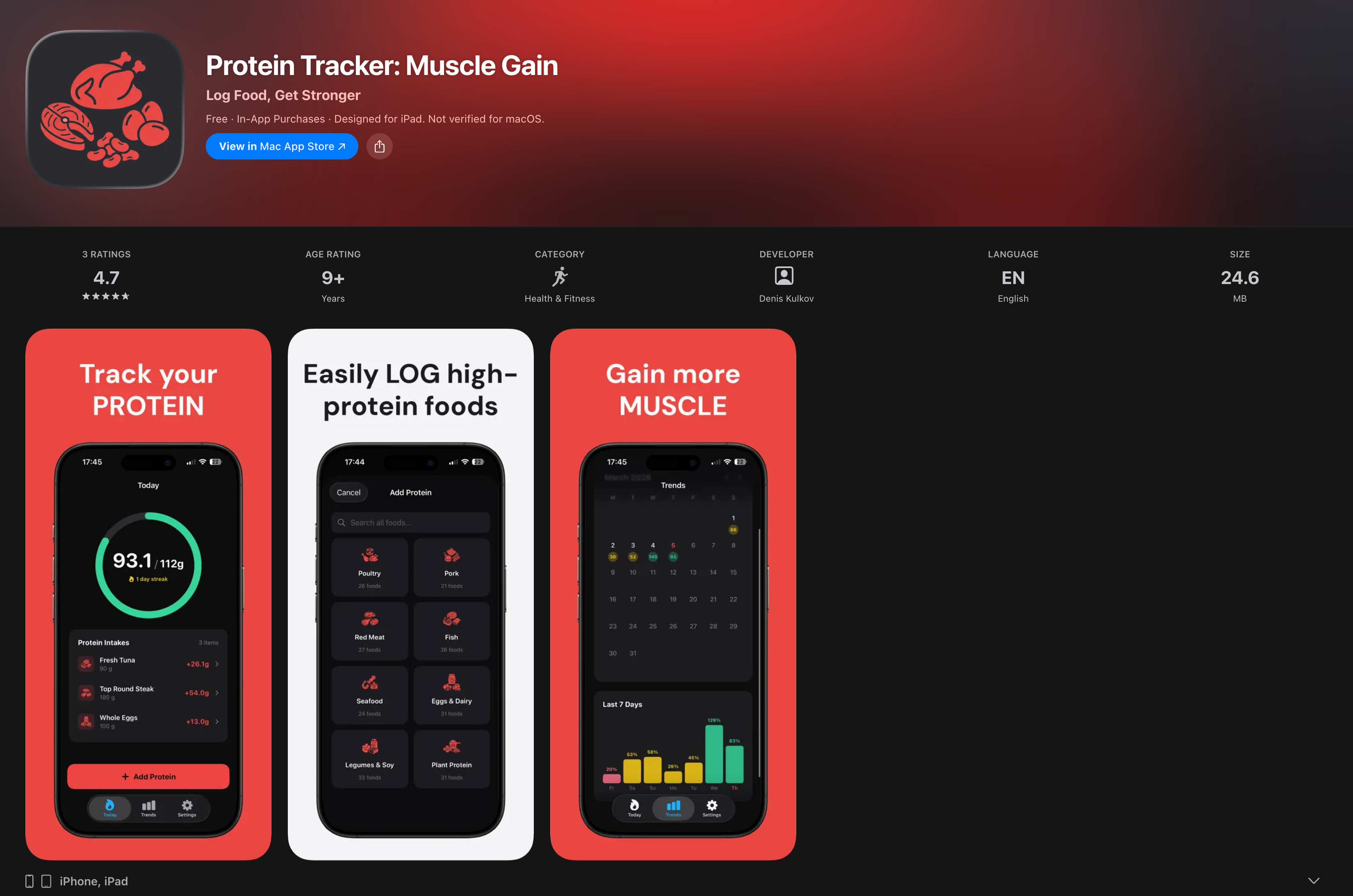
Two or three of these on rotation is the whole system, which makes logging repetitive — and repetitive is what survives. I keep my defaults in Protein Tracker, a protein tracking app for iPhone, so breakfast goes in once and I know what's left for the day before 9am.
High protein breakfast foods, ranked by grams per serving
| Food | Standard serving | Protein |
|---|---|---|
| Cottage cheese, low-fat | 1 cup | 24–28 g |
| Greek yogurt, nonfat plain | 1 cup | ~23 g |
| Whey or pea protein powder | 1 scoop | 20–25 g |
| Extra-firm tofu | 200 g | 16–22 g |
| Tempeh | 100 g | ~19 g |
| Eggs | 3 large | ~19 g |
| Skyr | 5.3 oz cup | ~17 g |
| Cold-smoked salmon | 3 oz | ~16 g |
| Deli turkey breast | 2 oz | ~11 g |
| Milk or kefir | 1 cup | 8–11 g |
| Hemp hearts | 3 tbsp | ~10 g |
| Peanut butter | 2 tbsp | ~8 g |
| Cheddar | 1 oz | ~7 g |
| Rolled oats | 1/2 cup dry | ~5 g |
How to add 20 grams without rebuilding breakfast
Keep what you already eat and bolt something onto it:
- Use milk instead of water in oatmeal, coffee, or a shake: +8 g per cup.
- Add a scoop of protein powder to oats, yogurt, or a smoothie: +20–25 g, stirred in off the heat.
- Put an egg on it — on the toast, in the wrap, next to the plate: +6 g each.
- Trade jam for ricotta or cottage cheese on toast: +14 g per half cup of ricotta, more for cottage cheese.
- Move from regular yogurt to Greek or skyr: roughly double the protein for the same volume.
- Leave hemp hearts on the counter: +10 g per 3 tbsp, no prep, works on anything.
Stack two of these and you clear 30 g without cooking anything new.
FAQ
How do I get 30 grams of protein at breakfast?
Pick one anchor worth 20 g on its own — a scoop of protein powder, a cup of cottage cheese or Greek yogurt, or three eggs with cheese — then add a second item worth 8–12 g. Two components, not six.
Is a high protein breakfast better than a high protein dinner?
For your daily total it barely matters; hitting the number is what counts. Breakfast is the easiest place to gain ground, because it's usually the lowest-protein meal of the three, and the appetite effect pays off when you still have the whole day in front of you.
What's the highest protein breakfast food that needs no cooking?
Cottage cheese, at 24–28 g a cup. Greek yogurt is close behind at roughly 23 g, and a single-serve cup of skyr sits near 17 g. All three take zero prep and work sweet or savory.
Can I hit 30 grams without protein powder?
Yes. Eggs, cottage cheese, Greek yogurt, deli turkey, smoked salmon, tofu, and tempeh all get there in ordinary portions. Powder is a shortcut on time and cost, not a requirement.
Does a protein rich breakfast help with weight loss?
Indirectly. It keeps you full into the afternoon and shrinks what you eat later, which makes a calorie deficit easier to hold. A protein rich breakfast doesn't burn fat on its own — the deficit does that.
Free Protein tools
- Chicken Breast Calorie CalculatorEnter chicken breast weight, whether you weighed it raw or cooked, skin and cooking method to see calories, protein, fat, carbs and the matching raw-to-cooked weight.
- Creatine Dosage CalculatorEstimate grams per day, loading-phase split doses, time to saturation, and tub supply for the question: how much creatine should I take?
- Daily Protein Requirement CalculatorEstimate how much protein a day you should consume using your body weight, age, activity level and goal. See the g/kg basis and a practical per-meal split.
- Egg Protein CalculatorChoose an egg size, quantity, part and cooking method to see protein, calories, full macros and the share of your daily protein target.
- High Protein Meal PlannerPlan a high protein meal planner split from your daily target. Choose 2 to 6 meals and a dietary preference to see grams per meal and example foods.
- Macros CalculatorUse this macros calculator to estimate daily calories and grams of protein, carbohydrates and fat for your chosen goal and macro split.
- Protein CalculatorUse this protein calculator to estimate a daily protein range from your body weight, activity level and goal, with simple per-meal splits.
- Protein Foods ChartFilter a protein foods chart by category, serving basis and minimum protein per serving, then sort the foods to find practical options to log.
- Protein in Chicken CalculatorEstimate the protein in a chicken portion using its cut, serving weight and raw or cooked basis.
- Protein in Fish CalculatorEnter a fish type and serving weight to convert protein in fish per 100g into tracker-ready grams for your portion.
- Protein in Lentils CalculatorEstimate the protein grams in a lentil serving by cooked weight. The result uses the listed boiled-lentil value and identifies when a dry value is unavailable.
- Protein in Meat ChartChoose a meat, enter its weight and select a raw or cooked basis to compare the protein grams in common meats.
- Protein in Nuts ChartChoose a nut type, serving size and minimum protein filter to compare protein grams across nuts and seeds.
- Protein Intake CounterTrack your daily protein target with quick-add portions or a custom amount. See your running total, grams remaining and entries in one place.