Plant based protein sources, ranked by protein per serving
The densest plant based protein sources are seitan, soy foods, and isolated pea or soy protein powder. Beans and lentils help, but they cost 128 to 185 calories for every 10 grams of protein they deliver. Hitting a high daily total almost always takes at least one concentrated source.
Plant based protein sources ranked by protein per serving
The servings below are what people actually eat, not standardized 100-gram portions, so read the last column too. That's the calorie price of the protein, and it decides whether a plant-based day is workable or exhausting.
| Food (serving) | Protein | Calories | Carbs | Calories per 10 g protein |
|---|---|---|---|---|
| Seitan, 100 g | 21–25 g | 120–140 | 4–14 g | ~55 |
| Pea or soy protein isolate, 30 g scoop | 23–25 g | 110–120 | 1–3 g | ~48 |
| Tempeh, 100 g | 19 g | 190 | 9 g | ~100 |
| Edamame, shelled, 1 cup (155 g) | 18 g | 190 | 14 g | ~105 |
| Lentils, cooked, 1 cup (198 g) | 18 g | 230 | 40 g | ~128 |
| Extra-firm tofu, 100 g | 16–19 g | 145 | 3 g | ~85 |
| Black beans, cooked, 1 cup (172 g) | 15 g | 227 | 41 g | ~150 |
| Chickpeas, cooked, 1 cup (164 g) | 14.5 g | 269 | 45 g | ~185 |
| Hemp hearts, 3 tbsp (30 g) | 9.5 g | 165 | 3 g | ~175 |
Carb figures include fiber. Seitan swings most by brand: some products are close to pure vital wheat gluten at 25 g per 100 g, others are cut with flour or breadcrumbs and land nearer 16 g. Read the panel rather than a generic database entry.
Calories and carbs are the real constraint, not completeness
Most writing about protein for vegans spends itself on amino acid completeness, and that question is mostly settled. Your body keeps a circulating pool of free amino acids, so complementary sources eaten across a day cover each other — rice and beans don't have to share a plate. Soy, quinoa, buckwheat, hemp, and pistachios carry all nine essential amino acids on their own; complete protein foods covers which are worth building meals around.
The thing that actually bites is arithmetic. Say you're 25 g short at the end of the day. From chickpeas that's roughly 1¾ cups — about 470 calories and 78 g of carbs. From a scoop of pea protein isolate it's about 115 calories and 2 g of carbs. Identical protein, a 350-calorie gap. Repeat that twice a day and you're either eating 700 calories you didn't plan for or quietly missing your target.
So high protein vegan foods sort into two tiers. Concentrated sources — seitan, tofu, tempeh, edamame, TVP, and isolated powders — run 48 to 105 calories per 10 g of protein, comparable to chicken thigh or whole eggs. Whole legumes run 128 to 185. Legumes earn their place on fiber and micronutrients, but build a whole day on them and the carb load gets unmanageable before the protein total does.
What a 120 g plant based protein day looks like
Here's a day that lands near 120 g without anything unusual:
- Breakfast — 60 g dry oats cooked in 300 ml soy milk, 2 tbsp hemp hearts: ~22 g
- Lunch — 200 g extra-firm tofu stir-fried with vegetables over 1 cup cooked quinoa: ~42 g
- Afternoon — one scoop of pea or soy protein in water: ~24 g
- Dinner — 100 g tempeh with 1 cup black beans and greens: ~34 g
That's about 122 g and roughly 1,900 to 2,100 calories once you count cooking oil and vegetables. Notice what's carrying it: three soy foods and a powder. Pull the shake out and replace it with beans and the day gains about 350 calories and 70 g of carbs for the same protein.
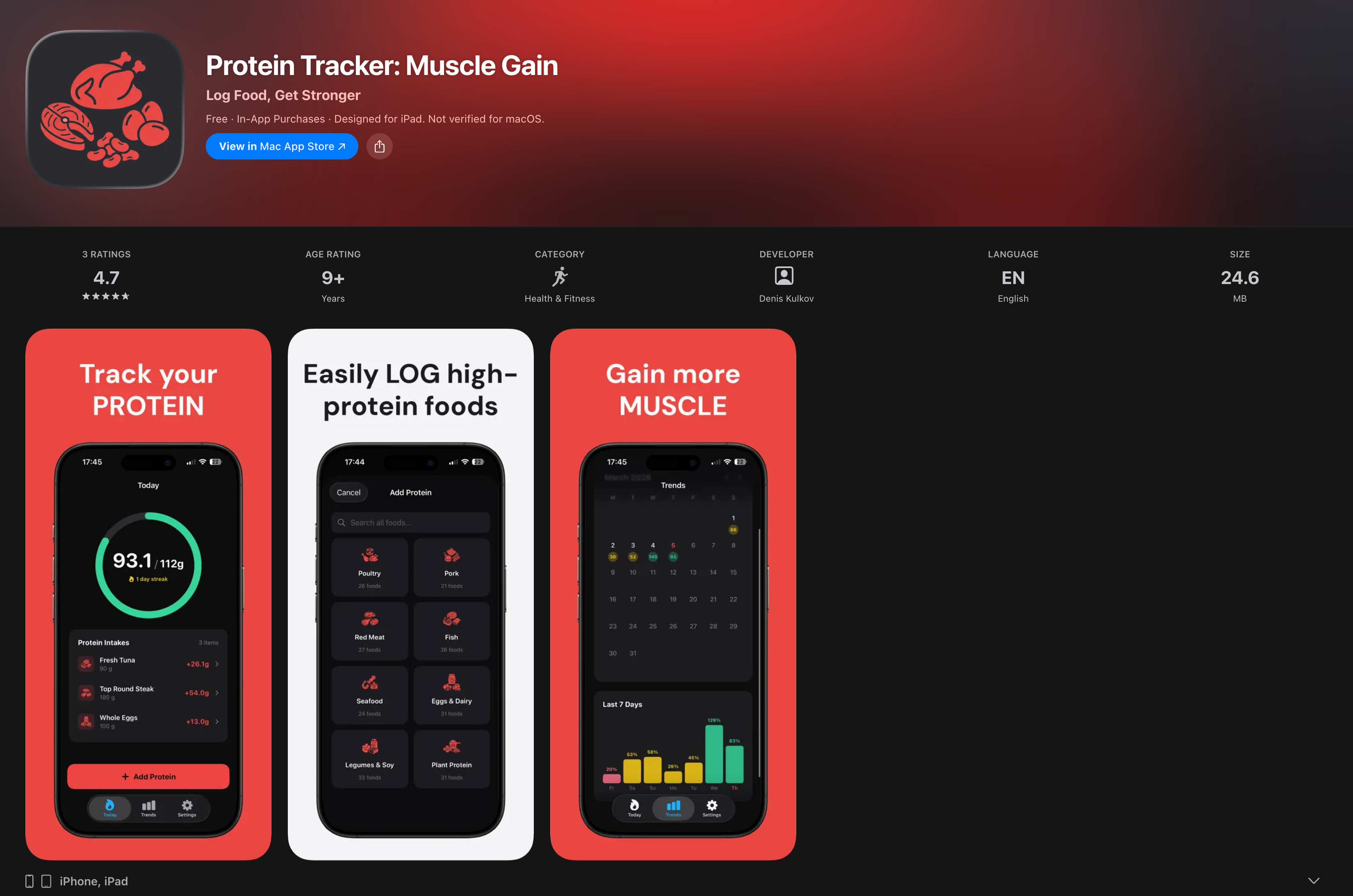
Because plant portions deliver 15 to 20 g where a chicken breast delivers 45, the total is easy to miss by 30 g while feeling like you ate protein at every meal. Logging a few typical days is usually enough to see the gap — Protein Tracker is a protein tracking app for iPhone if you want the running total rather than a mental estimate.
Why most plant-based days need one concentrated source
Below roughly 100 g of protein per day, beans, lentils, whole grains, and nuts can carry it alone. Above that, the calorie math stops cooperating unless something in the day is protein-dominant.
Soy is the most useful lever because it comes in four densities. Soy milk gives 7 to 8 g per cup at 80 to 100 calories, tofu 17 g per 100 g, tempeh 19 g, and dry TVP about 12 g per quarter cup at 80 calories — it rehydrates into a ground-meat texture and disappears into chili or bolognese. Seitan beats all of them on density but is low in lysine, so it works best alongside legumes rather than as the whole plan.
Powder is the cheapest fix by calories: one 30 g scoop of pea or soy isolate closes a 25 g gap for roughly what a banana costs. It isn't required, just the least painful way to buy the last 25 grams.
The leucine adjustment for plant-based lifters
Leucine is the amino acid that flips the switch on muscle protein synthesis, and most plant proteins carry proportionally less of it than dairy or meat. Isolated soy and pea protein come close to animal sources; whole legumes sit lower, grains lower still. Plant proteins are also digested slightly less completely, since fiber and antinutrients cut into how much of what's on the label gets absorbed.
Two practical consequences. Per-meal doses want to be larger — 30 to 40 g of plant protein rather than the 20 to 25 g often quoted for whey, which how much protein your body can use per meal covers in more depth. And the daily total should sit at the upper end of the athlete range, roughly 1.6 to 2.0 g per kilogram of bodyweight if you're training for size, rather than the middle. For an 80 kg lifter that's about 130 to 160 g; how much protein per day explains how the range is set.
Plant protein builds muscle fine. It just needs a somewhat larger number, spread across fewer and bigger doses.
Foods that read as high-protein and aren't
A few staples get filed under high protein vegetarian foods on reputation rather than numbers. Quinoa is 8 g per cooked cup against 39 g of carbs. Almond milk is 1 g per cup. Nut butters are fat foods with protein attached — 2 tbsp of peanut butter is 7 to 8 g for 190 calories. Veggie burgers built from vegetables and grains land at 5 to 10 g, while soy- or pea-based ones hit 15 to 20 g. Chia and flax give 4 to 5 g per 2 tbsp. Eat them for what they're good at; don't count on them for the total.
FAQ
How do vegans get protein without meat or dairy?
The same way anyone does: by eating a few protein-dominant foods rather than hoping it accumulates. Soy in some form at two meals a day, legumes at a third, and seeds or a powder to top up gets most people to 100–130 g. The difference from an omnivore diet is that the sources are less concentrated, so more of them are needed.
Which plant food has the most protein per serving?
Seitan, at 21 to 25 g per 100 g, with the fewest calories attached. Isolated pea and soy powders match it per scoop and beat it on calorie cost. Among whole, unprocessed foods, tempeh and shelled edamame lead.
How much protein is in tofu, tempeh, and lentils?
The protein in tofu tracks its firmness: extra-firm runs 16 to 19 g per 100 g because more water has been pressed out, silken far less. Protein in tempeh is a little denser at about 19 g per 100 g, since it's whole fermented beans rather than curdled soy milk. Protein in lentils comes to roughly 18 g per cooked cup, arriving with 40 g of carbs.
Do I need to combine plant proteins at every meal?
No. The complementary-protein-at-every-meal rule was abandoned decades ago. Eating a reasonable variety of legumes, grains, nuts, and seeds across a day covers the amino acid profile, and soy is complete on its own.
Is plant protein worse than whey for building muscle?
Not when total intake and per-meal dose are matched. Plant proteins are generally lower in leucine and slightly less digestible, so the practical fix is a larger dose — 30 to 40 g per meal — and a daily total near the top of the recommended range.
Free Protein tools
- Chicken Breast Calorie CalculatorEnter chicken breast weight, whether you weighed it raw or cooked, skin and cooking method to see calories, protein, fat, carbs and the matching raw-to-cooked weight.
- Creatine Dosage CalculatorEstimate grams per day, loading-phase split doses, time to saturation, and tub supply for the question: how much creatine should I take?
- Daily Protein Requirement CalculatorEstimate how much protein a day you should consume using your body weight, age, activity level and goal. See the g/kg basis and a practical per-meal split.
- Egg Protein CalculatorChoose an egg size, quantity, part and cooking method to see protein, calories, full macros and the share of your daily protein target.
- High Protein Meal PlannerPlan a high protein meal planner split from your daily target. Choose 2 to 6 meals and a dietary preference to see grams per meal and example foods.
- Macros CalculatorUse this macros calculator to estimate daily calories and grams of protein, carbohydrates and fat for your chosen goal and macro split.
- Protein CalculatorUse this protein calculator to estimate a daily protein range from your body weight, activity level and goal, with simple per-meal splits.
- Protein Foods ChartFilter a protein foods chart by category, serving basis and minimum protein per serving, then sort the foods to find practical options to log.
- Protein in Chicken CalculatorEstimate the protein in a chicken portion using its cut, serving weight and raw or cooked basis.
- Protein in Fish CalculatorEnter a fish type and serving weight to convert protein in fish per 100g into tracker-ready grams for your portion.
- Protein in Lentils CalculatorEstimate the protein grams in a lentil serving by cooked weight. The result uses the listed boiled-lentil value and identifies when a dry value is unavailable.
- Protein in Meat ChartChoose a meat, enter its weight and select a raw or cooked basis to compare the protein grams in common meats.
- Protein in Nuts ChartChoose a nut type, serving size and minimum protein filter to compare protein grams across nuts and seeds.
- Protein Intake CounterTrack your daily protein target with quick-add portions or a custom amount. See your running total, grams remaining and entries in one place.