High protein meal prep that hits a daily gram target
High protein meal prep works best when you build the week around a daily gram target instead of a stack of recipes. Cook three protein anchors once, portion them by weight, and rotate sauces and carbs around them. The grams stay fixed; the flavor changes.
Set the gram target before you pick the menu
Decide the daily number first. Most people training for size or strength land somewhere between 1.6 and 2.2 g of protein per kilogram of body weight — for an 80 kg lifter, roughly 130 to 175 g a day. This guide uses 150 g because it divides cleanly.
A 150 g day splits like this:
- Breakfast, 35 g. Three large eggs (about 19 g) plus 150 g of low-fat cottage cheese (about 17 g).
- Lunch, 45 g. One prepped container, eaten cold or reheated.
- Dinner, 50 g. One prepped container with a slightly bigger scoop of the meat anchor, or a container plus a small side of yogurt.
- Snack, 20 g. 200 g of nonfat Greek yogurt, or another 150 g of cottage cheese.
Total is what moves the needle; the split is about what you can actually eat without forcing 80 g into one sitting. For the reasoning behind spreading it out, see how much protein you can use in one meal and how much protein you need per day.
Batch-cook three protein anchors, not seven recipes
The reason to meal prep high protein food in one session is that protein is the slow part. Sauce takes four minutes; rice cooks itself. Cook three anchors on Sunday, keep them plain, and treat everything else as assembly.
Anchor 1: chicken thighs, 1.4 kg (3 lb) raw, boneless and skinless. Salt, roast at 425°F until the thickest part reads at least 165°F — thighs are better around 175°F, where the connective tissue softens. Expect roughly 1,050 g of cooked meat at about 25 g of protein per 100 g. That's seven 150 g portions of ~37 g each. Thighs run roughly 9% fat raw — close to triple a trimmed breast — which is why they survive a fourth-day reheat that turns breast to rope.
Anchor 2: 93/7 ground turkey, 900 g (2 lb) raw. Brown it in a wide pan so it sears instead of steams, then season only with salt. It cooks down to roughly 650 g at about 26 g per 100 g — five 130 g portions of ~34 g.
Anchor 3: tofu or beans. Two 400 g blocks of extra-firm tofu, pressed 20 minutes and roasted, or two cans of black beans. Tofu labels vary more than anything else here — firm and extra-firm blocks run roughly 10 to 19 g per 100 g depending on the brand, so read yours instead of trusting a generic figure. Canned black beans, drained and rinsed, sit near 7.5 g per 100 g.
One session, three textures, no recipe to follow on a Tuesday night. That's what makes easy high protein meals stick past week two.
Six high protein meal prep containers, with the grams counted
Every number below is the finished container, weighed after cooking.
- Chicken burrito bowl, 45 g. 145 g cooked thigh (36 g), 85 g drained black beans (6 g), 120 g cooked rice (3 g), salsa and lime.
- Ground turkey and rice, 42 g. 140 g cooked turkey (36 g), 150 g cooked rice (4 g), 100 g green beans (2 g), soy-garlic sauce.
- Tofu stir-fry, 38 g. 200 g pressed extra-firm tofu (32 g), 150 g cooked jasmine rice (4 g), 100 g broccoli and peppers (2 g).
- Greek chicken and potatoes, 44 g. 120 g cooked thigh (30 g), 200 g roasted potatoes (4 g), 100 g nonfat Greek yogurt whisked with lemon, garlic and dill (10 g).
- Turkey chili, 40 g. 120 g cooked turkey (32 g), 100 g kidney beans (8 g), tomato, cumin, chipotle.
- Black bean burrito, 40 g. 250 g drained black beans (19 g), 150 g cooked rice (4 g), 40 g shredded cheddar (10 g), one 10-inch flour tortilla (about 7 g).
The bowls and the burrito make a high protein lunch you can eat cold at a desk. The chili and the potatoes are the better high protein dinner, since both improve on day two and reheat without drying out.
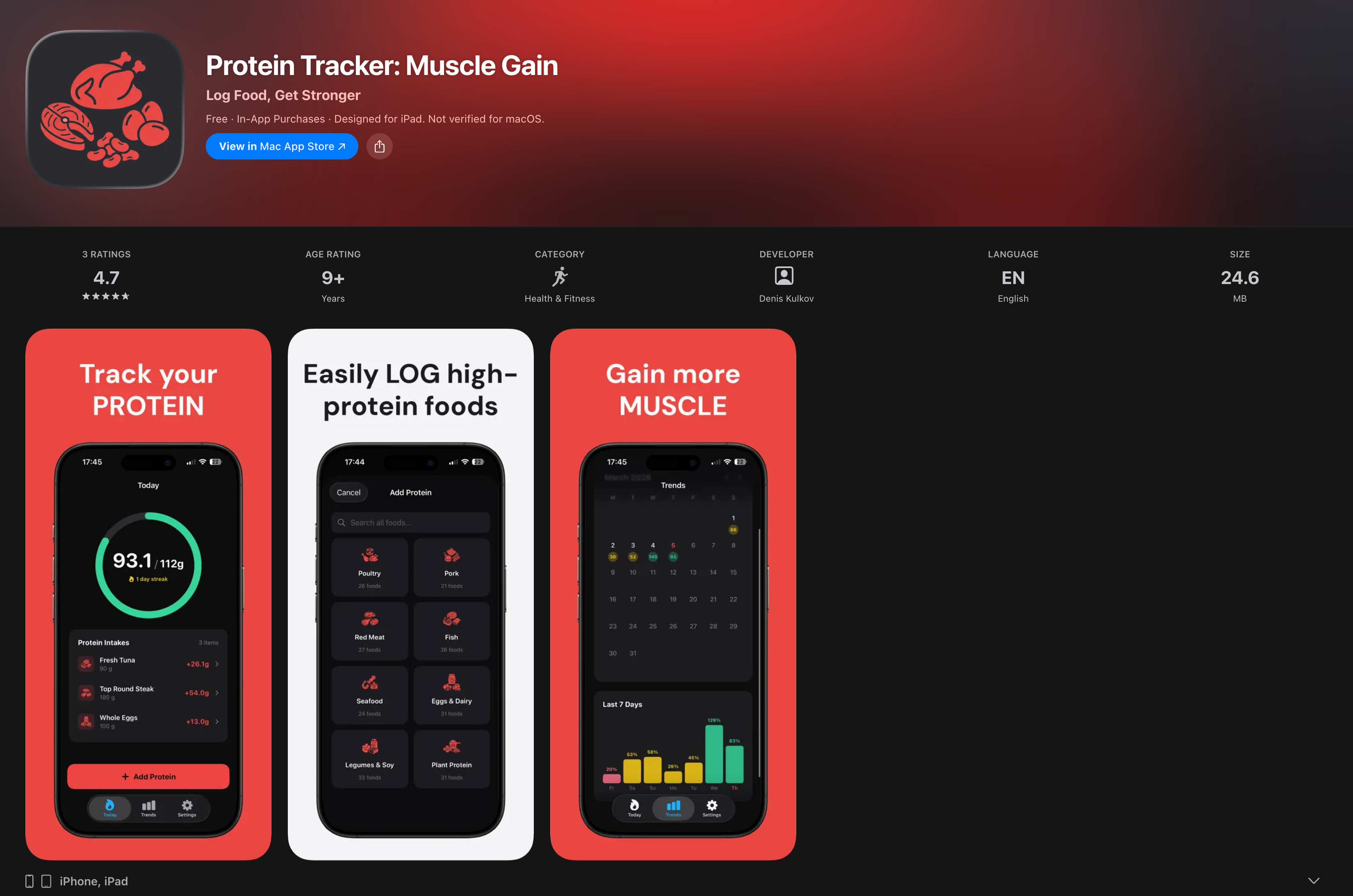
Weigh a container once and the number is settled — Thursday's bowl is the same 45 g it was on Sunday. That's where a protein tracking app for iPhone like Protein Tracker earns its place: each prepped container becomes a saved entry you log in one tap instead of re-weighing it.
Rotate the sauce and the carb, not the protein
Boredom by Wednesday is almost never the protein's fault. It's eating the same sauce five times. Keep the anchors seasoned with salt only and build flavor at assembly:
- Mexican: salsa verde, lime, cilantro, pickled red onion. Carb: rice or corn tortillas.
- Greek: yogurt with lemon, garlic and oregano. Carb: potatoes or pita.
- Korean-style: gochujang thinned with rice vinegar and a little honey. Carb: short-grain rice.
- Italian: crushed tomato, basil, chili flake, parmesan. Carb: pasta or white beans.
- Thai-style: peanut, lime, fish sauce, chili. Carb: jasmine rice or rice noodles.
Store sauces in separate 60 ml containers and add them at reheat, not at prep — sauce sitting on rice for four days goes soggy. Five sauces across three anchors is fifteen combinations, so you run out of week before you run out of high protein meal prep ideas.
Raw-to-cooked shrinkage: the table that keeps counts honest
Meat loses water, not protein. A 200 g raw chicken thigh that leaves the oven at 150 g still holds the ~37 g it started with; the protein simply got denser per gram. This is the most common way high protein meal prep recipes get miscounted — someone weighs raw, then looks up the cooked figure, and inflates the day by a quarter.
Pick one side and stay on it. Raw weights stay more consistent between cooking sessions; cooked weights are more practical when splitting a finished tray into six containers.
| Ingredient (raw or dry) | Weight after cooking | Protein per 100 g raw | Protein per 100 g cooked | 200 g raw yields |
|---|---|---|---|---|
| Chicken thigh, boneless skinless | ~75% | ~18–19 g | ~25 g | ~150 g, ~37 g protein |
| Chicken breast, boneless skinless | ~75% | ~23 g | ~31 g | ~150 g, ~46 g protein |
| Ground turkey, 93/7 | ~72% | ~19 g | ~26 g | ~145 g, ~38 g protein |
| Ground beef, 90/10 | ~75% | ~20 g | ~26 g | ~150 g, ~40 g protein |
| Salmon fillet | ~82% | ~20 g | ~24–25 g | ~165 g, ~40 g protein |
| Extra-firm tofu, pressed | ~88% | ~16 g | ~18 g | ~175 g, ~32 g protein |
| White rice, dry | ~265% | ~7 g | ~2.7 g | ~530 g, ~14 g protein |
| Lentils, dry | ~270% | ~25 g | ~9 g | ~540 g, ~49 g protein |
Yields are approximate and drift with heat, cut thickness, and how hard you press the tofu. Grains and legumes move the opposite direction: they absorb water, so their per-100 g protein falls even though the total in the pot is unchanged.
How long the containers actually keep
USDA guidance for cooked poultry and meat leftovers is three to four days refrigerated. Get containers into the fridge within two hours of cooking, and reheat to 165°F. Anything meant for day five or later goes into the freezer on prep day — freezing stops the clock, it doesn't rewind it.
Cooked rice deserves its own rule: cool it fast, spread out rather than sitting in a hot block, and refrigerate promptly. Rice held warm for hours is the classic setup for Bacillus cereus.
FAQ
How long does high protein meal prep last in the fridge?
Three to four days for cooked chicken, turkey, and beef under USDA leftover guidance. Cool containers within two hours and reheat to 165°F. If you're prepping seven days at once, freeze days five through seven on the same day you cook them.
Should I count protein raw or cooked?
Either, as long as the weight and the reference number match. 200 g of raw chicken thigh and the ~150 g it becomes after roasting carry the same protein — only the density per 100 g changes. Mixing the two is what produces a day that reads 150 g and was really 120 g.
Can I hit 150 g of protein a day from whole foods only?
Yes. Two prepped containers at 42–45 g, a 35 g breakfast, and a 20 g yogurt snack lands around 145 g with no powder involved. Shakes are a convenience for days when the cooking didn't happen, not a requirement.
What's the cheapest protein anchor to batch-cook?
Dried legumes, eggs, and chicken thighs, in roughly that order per gram of protein at US grocery prices. Thighs usually cost less per pound than breast and tolerate reheating better. There's more on stretching the budget in cheap protein sources.
How do I stop prepped food from tasting identical by Wednesday?
Season the anchors with salt only and add sauce at reheat. Changing the carb — rice on Monday, potatoes on Tuesday, pasta on Wednesday — does more for perceived variety than changing the protein does, and it keeps a high protein dinner from feeling like the same plate four nights running.
Free Protein tools
- Chicken Breast Calorie CalculatorEnter chicken breast weight, whether you weighed it raw or cooked, skin and cooking method to see calories, protein, fat, carbs and the matching raw-to-cooked weight.
- Creatine Dosage CalculatorEstimate grams per day, loading-phase split doses, time to saturation, and tub supply for the question: how much creatine should I take?
- Daily Protein Requirement CalculatorEstimate how much protein a day you should consume using your body weight, age, activity level and goal. See the g/kg basis and a practical per-meal split.
- Egg Protein CalculatorChoose an egg size, quantity, part and cooking method to see protein, calories, full macros and the share of your daily protein target.
- High Protein Meal PlannerPlan a high protein meal planner split from your daily target. Choose 2 to 6 meals and a dietary preference to see grams per meal and example foods.
- Macros CalculatorUse this macros calculator to estimate daily calories and grams of protein, carbohydrates and fat for your chosen goal and macro split.
- Protein CalculatorUse this protein calculator to estimate a daily protein range from your body weight, activity level and goal, with simple per-meal splits.
- Protein Foods ChartFilter a protein foods chart by category, serving basis and minimum protein per serving, then sort the foods to find practical options to log.
- Protein in Chicken CalculatorEstimate the protein in a chicken portion using its cut, serving weight and raw or cooked basis.
- Protein in Fish CalculatorEnter a fish type and serving weight to convert protein in fish per 100g into tracker-ready grams for your portion.
- Protein in Lentils CalculatorEstimate the protein grams in a lentil serving by cooked weight. The result uses the listed boiled-lentil value and identifies when a dry value is unavailable.
- Protein in Meat ChartChoose a meat, enter its weight and select a raw or cooked basis to compare the protein grams in common meats.
- Protein in Nuts ChartChoose a nut type, serving size and minimum protein filter to compare protein grams across nuts and seeds.
- Protein Intake CounterTrack your daily protein target with quick-add portions or a custom amount. See your running total, grams remaining and entries in one place.