Does protein make you gain weight? Three reasons the scale moves
Protein doesn't make you gain weight on its own. Body weight follows total calories, and protein is the macro most likely to pull that total down by blunting appetite. When the scale climbs during a high-protein push, the cause is added calories, water, or new muscle.
Does protein make you gain weight, or do calories?
No macro has a private route into your fat cells. Dietary fat lands there most directly; carbohydrate mostly gets burned or stored as glycogen, and converting it to body fat is slow and inefficient outside sustained overfeeding. Protein is the least likely of the three to end up as body fat: strip the nitrogen off an amino acid — you excrete it as urea — and the carbon skeleton left over gets burned or turned into glucose.
Protein also costs the most to process: roughly 20–30% of its calories burn off during digestion and metabolism, against about 5–10% for carbohydrate and a couple of percent for fat. So 600 calories of protein nets closer to 450.
Can protein make you gain weight? Yes — as calories, like any other food. Just not through a mechanism unique to protein.
Reason one: you added protein instead of swapping it in
Here's the arithmetic almost nobody runs. Protein is 4 calories per gram, so 150 g of protein is 600 calories and 180 g is 720 — two scoops of whey in milk plus a chicken breast is most of a small meal.
If you held steady at 2,400 calories and bolted 600 calories of protein onto the same meals, you're at 3,000 — a 4,200-calorie weekly surplus. On the 3,500-calories-per-pound rule of thumb, that's over a pound of fat a week, and none of it is about the protein being protein.
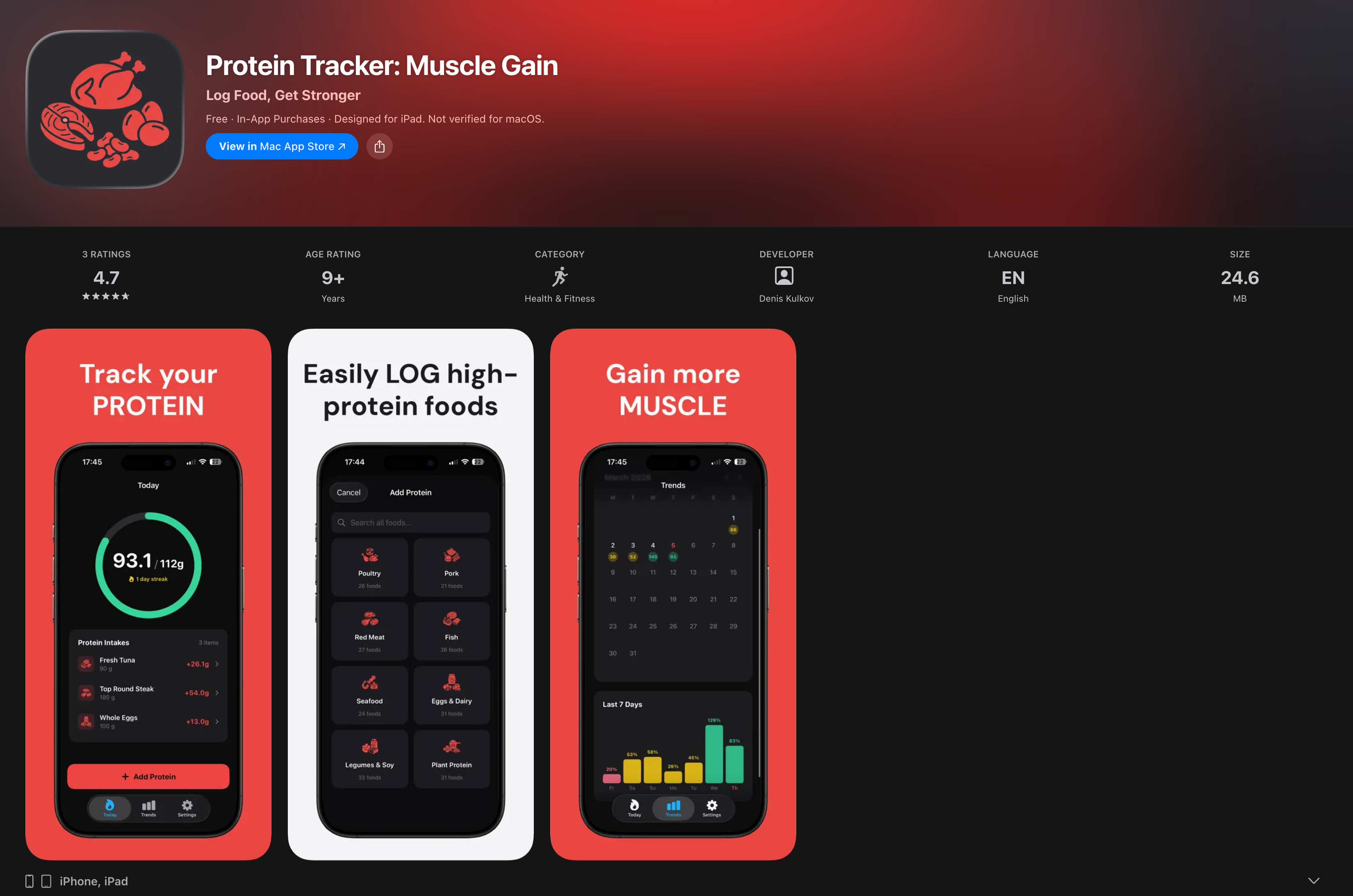
Protein has to displace something rather than sit on top of it. The rice portion shrinks, the cooking oil gets measured, the evening snack goes. That trade is easy to miss unless grams and calories sit in the same place, which is where logging with something like Protein Tracker, a protein tracking app for iPhone, helps — there's still time to change dinner before the day is done.
Set the target before you trade things out — how much protein per day gives the number to swap toward, and stacking instead of swapping is the most common way a high-protein approach to fat loss backfires.
Reason two: glycogen and water, not fat
Almost nobody raises protein in isolation. It arrives with a new training program, and training changes how much water your muscles hold.
Muscle stores carbohydrate as glycogen, and glycogen is stored wet — commonly estimated at about 3 grams of water per gram of glycogen. Topping off partly depleted stores can put a couple of pounds on the scale without a gram of new fat. Creatine, started the same week, pulls more water into muscle and usually shows up as 2–4 lb early on. Unfamiliar training loads add short-term fluid retention, and high-protein convenience foods — deli meat, jerky, bars, canned tuna — carry serious sodium.
Speed is the tell. Three pounds of fat takes something like a 10,500-calorie surplus. If three pounds showed up in five days, it was water.
Reason three: the weight is muscle
Sometimes the scale is right and the reading of it is wrong. Enough protein, progressive lifting, and a small surplus build lean mass, and lean mass weighs something.
Keep expectations honest. A beginner in his first serious year might add 1–2 lb of muscle a month in good conditions; women and experienced lifters should plan on half that or less. It's slow, and it cannot explain a four-pound week. It also isn't automatic — the protein only matters if the training is there to use it, which is the argument in protein intake for muscle gain.
The check is a tape measure and a logbook. Waist flat, chest and arms creeping up, top sets climbing: the added weight is doing what you wanted.
Telling the three apart
| What moved | Typical speed | What else you notice | What to do |
|---|---|---|---|
| Added calories (fat) | 0.5–2 lb a week, steadily | Waistband tighter, lifts unchanged | Re-run the math, swap rather than stack |
| Glycogen, water, sodium | 2–4 lb in days, then flat | Muscles fuller, weight bounces daily | Nothing — reweigh in two weeks |
| New muscle | 0.25–0.5 lb a week at best | Waist steady, tape up on arms and chest | Keep going, reassess in a month |
Weigh under the same conditions and judge the weekly average. Day-to-day swings of 2–3 lb from food, sodium, and hydration are normal.
When too much protein does make you fat
Protein isn't a free food. A surplus is a surplus, and though converting amino acids into body fat is expensive and uncommon, the extra energy still gets accounted for — usually because the protein crowded nothing out.
Two habits do most of the damage. Liquid protein is the first: a shake with whole milk, peanut butter, banana, and honey clears 700 calories and barely registers as a meal. Packaged "high-protein" food is the second, where 20 g of protein rides along with 15 g of fat and a pile of sugar alcohols. Read the calorie line, not the front of the box.
Past roughly 1.6 g per kg of body weight per day — about 0.7 g per pound — extra protein does little more for muscle growth, though up to 2.2 g/kg stays defensible while dieting, when appetite control is worth the calories.
FAQ
Will protein make you gain weight if you don't lift weights?
Only if it puts you in a calorie surplus. Without training there's no stimulus to build meaningful muscle, so those calories behave like any others. Protein is still the most filling macro, so at fixed calories it makes weight easier to control.
Does protein powder make you gain weight?
A scoop of whey isolate is typically 100–130 calories, which isn't a weight problem by itself — what you put it in is. Water or unsweetened milk keeps a shake near its label number; a mass gainer runs 700–1,000 calories per serving by design.
Does too much protein make you fat?
Not through any special pathway; turning protein into body fat is inefficient and rare. The calories still count toward your daily total, though, and an unintended surplus gets stored. So does protein make you fat? Only the way any overeaten food does.
Does eating protein make you gain weight if my calories stay the same?
No. At matched calories, moving carbohydrate or fat over to protein doesn't add body fat; it tends to favor lean mass and slightly raises the energy spent on digestion. Scale weight can still wobble while glycogen and water settle.
Free Protein tools
- Chicken Breast Calorie CalculatorEnter chicken breast weight, whether you weighed it raw or cooked, skin and cooking method to see calories, protein, fat, carbs and the matching raw-to-cooked weight.
- Creatine Dosage CalculatorEstimate grams per day, loading-phase split doses, time to saturation, and tub supply for the question: how much creatine should I take?
- Daily Protein Requirement CalculatorEstimate how much protein a day you should consume using your body weight, age, activity level and goal. See the g/kg basis and a practical per-meal split.
- Egg Protein CalculatorChoose an egg size, quantity, part and cooking method to see protein, calories, full macros and the share of your daily protein target.
- High Protein Meal PlannerPlan a high protein meal planner split from your daily target. Choose 2 to 6 meals and a dietary preference to see grams per meal and example foods.
- Macros CalculatorUse this macros calculator to estimate daily calories and grams of protein, carbohydrates and fat for your chosen goal and macro split.
- Protein CalculatorUse this protein calculator to estimate a daily protein range from your body weight, activity level and goal, with simple per-meal splits.
- Protein Foods ChartFilter a protein foods chart by category, serving basis and minimum protein per serving, then sort the foods to find practical options to log.
- Protein in Chicken CalculatorEstimate the protein in a chicken portion using its cut, serving weight and raw or cooked basis.
- Protein in Fish CalculatorEnter a fish type and serving weight to convert protein in fish per 100g into tracker-ready grams for your portion.
- Protein in Lentils CalculatorEstimate the protein grams in a lentil serving by cooked weight. The result uses the listed boiled-lentil value and identifies when a dry value is unavailable.
- Protein in Meat ChartChoose a meat, enter its weight and select a raw or cooked basis to compare the protein grams in common meats.
- Protein in Nuts ChartChoose a nut type, serving size and minimum protein filter to compare protein grams across nuts and seeds.
- Protein Intake CounterTrack your daily protein target with quick-add portions or a custom amount. See your running total, grams remaining and entries in one place.